Pneumatic Valves For Hazardous Zones
Pneumatic Now2026-06-04T12:22:50-07:00Why Pneumatic Valves are the Choice for Spark-Free Safety
Using pneumatic valves in hazardous or flammable chemical environments.
Spark-Free Safety: Why Pneumatic Valves Are the Gold Standard for Hazardous Zones
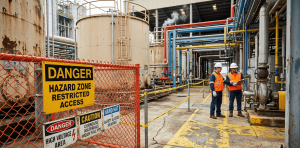
In the world of industrial automation, “safety first” isn’t just a slogan—it’s a requirement and a life-saving necessity. When you’re dealing with flammable gases, chemicals, or combustible dust, even a small spark can lead to catastrophic results.
For many the choice between electronic and pneumatic control systems often comes down to one factor: Explosion-proof integrity.
The Hidden Danger of Electricity
In a standard industrial environment, electromagnetic valves (solenoids) are ubiquitous. They are fast and reliable, but they rely on electrical currents to function. In a hazardous zone (often classified as Class I, Div 1 or ATEX Zone 0), electricity is a liability.
- Arcing: Opening or closing a circuit can create a tiny spark.
- Heat Generation: Overloaded coils can reach temperatures high enough to ignite surrounding vapors.
- Faults: Frayed wires or short circuits are unpredictable ignition sources.
The Pneumatic Advantage: Inherently Safe
Pneumatic valves operate on compressed air, not electricity. This fundamental difference makes them inherently safe (IS) for high-risk environments.
- Zero Ignition Risk
Since there is no electricity flowing through a purely pneumatic valve, there is no risk of arcing or sparking. This eliminates the need for heavy, expensive “explosion-proof” metal housings that are required to contain internal electrical blasts.
- Cool Operation
While electrical components can overheat during high-cycle applications, compressed air actually has a cooling effect. Pneumatic systems stay at ambient temperatures, staying well below the “Auto-Ignition Temperature” (AIT) of most industrial chemicals.
- Simplicity in Hazardous Zoning
Navigating ATEX or NEC codes can be a headache. Using fully pneumatic logic—where even the sensors and limit switches are air-driven—simplifies your compliance. You aren’t just protecting the valve; you’re removing the electrical hazard from the “hot zone” entirely.
Key Applications in Chemical Environments
Where does spark-free technology shine the brightest?
- Refineries & Fuel Handling: Moving volatile liquids where vapors are always present.
- Paint Booths: Fine mists of solvent-based paints are highly conductive and flammable.
- Chemical Processing: Environments involving hydrogen, methane, or acetylene.
- Dust-Heavy Industries: Flour mills or plastic processing where “static” sparks can cause dust explosions.
Making the Switch
Transitioning to a spark-free environment doesn’t mean sacrificing control. Modern Air-Pilot Valves allow you to use a small pulse of air to trigger a much larger valve, giving you the same precision as an electronic setup without the risk.